
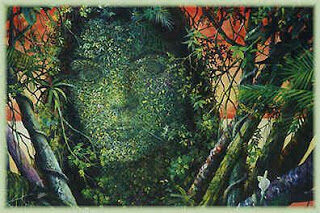
I’ve been reading some interesting books lately, and one consistent theme that keeps popping up in a variety of ways is the concept of paradigms and knowledge filtering. Whether we like to admit it or not, we all fall prey to these mundane influences. Let me explain.. This content explores knowledge filters, principles and their application in modern life.
Furthermore, a paradigm is a philosophical and theoretical framework—often used in science, religion, or culture—within which theories, laws, generalizations, and even the “right” kinds of experiments are formulated. More broadly, it is any interpretive lens that tells us what counts as real, what counts as evidence, and what should be dismissed. In other words, paradigms don’t just shape our conclusions; they shape what we consider worth noticing in the first place, which is why knowledge filters can feel invisible while they are actively guiding our perception. them are formulated; broadly, a philosophical or theoretical framework of any kind.
The act of “knowledge filtering” happens when the individual consciously or unconsciously excludes, rejects, or ignores information that does not conform to their chosen paradigm. Michael Cremo presents a compelling argument about the dangers of knowledge filtering in this article. In some instances, the person cannot even see, hear or experience the information at all, even though for everyone else it is as clear as day. An alarming and somewhat humorous example of this phenomena can be seen in the NLP (Neuro-Linguistic Programming) work of Derren Brown and his “Invisible Man” trick. The young film student in this video is totally freaked out by Derren’s sudden disappearance and is totally unaware that Derren’s NLP has blocked the ability of his senses to perceive certain information, specifically the fact that Derren is sitting right in front of him!
Humorous as this video is, it illustrates that we ALL have a tendency to create knowledge filters based on what we choose to believe and what paradigm we feel most comfortable with.
These philosophical and theoretical frameworks begin forming from the very beginning of our life. As soon as we leave the womb of our mother we are literally slapped into an I-am-this-body paradigm by the doctor. Immediately after, we’re given a new name, home address, social security number, and a set of religious and social beliefs to boot—external labels that quickly become internal identity. From that point on, much of what we “know” is filtered through roles and categories (citizen, believer, worker, consumer), which can make it difficult to question the starting assumption behind them: that the body and its social storyline are the whole of who we are.. As soon as we leave the womb of our mother we are literally “slapped” into a “I-am-this-body” paradigm by the doctor. Immediately after we’re given a new name, home address, social security number, and a set of religious and social beliefs to boot! Alas, one more cycle of physical existence begins — we learn how to walk and talk all over again; we go to school, get a job, pay taxes, get cheated, raise a family, grow old, get sick, and eventually die. And if after all that, if we didn’t learn from our mistakes and sufficiently purify our spirit, no problem, we get to do it all over again!
The soul’s newly adopted framework is slowly but surely built into a solid “self-imposed tomb” wherein we live out our make-believe lives in a world of names — a world characterized by change that we try to legitimize by categorization and naming conventions. The media reinforces these belief systems and consumerism drives in a final “nail” by firmly enslaving our minds with lust, greed and envy. Before long we are just another face on the “merry-go-round” of mundanity, regardless of social status or outside dress. It never ceases to amaze me when I see an ultra-orthodox Jew smoking or hear of a Buddhist monk eating meat. However, these absurd contradictions are just part of the play of material existence. Indeed hypocrisy is the De facto standard for all paradigms emanating from material desire, especially those clothed in the guise of religion. In other words, simply adhering to some religious or cultural paradigm does not guarantee liberation. In many cases, such dogmatic obstinacy can actually be the most damaging thing for the soul. No one has all the answers except those rare enlightened souls who occasionally visit this mortal world. For rest of us, it is a good idea to remain a student of wisdom and never ever stop learning. If that means questioning our tradition and the paradigm that comes with it, then so be it.
The Srimad Bhagavatam urges us to kick out all materially motivated religious paradigms and seek a path of pure devotion. A path that can lead us once and for all out of the cycle of reincarnation. Such a path of purity, however, must be totally unmotivated and uninterrupted.
The supreme occupation [dharma] for all humanity is that by which one can attain to loving devotional service unto the transcendent Lord. Such devotional service must be unmotivated and uninterrupted to completely satisfy the self. [SB. 1.2.6]
You see, when we deviate from our original pure consciousness and filter knowledge through a paradigm based on the bodily concept of life, we lose the capacity to remember our pre-birth awareness or recognize the absurdity of our present entanglement. The knowledge filter becomes self-reinforcing: bodily identification shapes what we seek, what we fear, what we call success, and what we dismiss as irrelevant. Over time, even profound experiences or teachings can be interpreted in a way that protects the original assumption rather than challenges it, which is why spiritual reminders can feel distant or unbelievable when the filter is strong. When this remembrance is lost, all knowledge acquired is built on a false foundation. At the present moment, the majority of human civilization is acting on such a false platform of bodily identification. Any identification that is culturally, socially, physically, or in any way materially infected is false and therefore can only lead to frustration and failure. The fact is, we are not these bodies. Rather, we are the pure spirit soul, symptomized by the consciousness that animates the body. To believe that we are nothing but hairy skin bags filled with blood, mucus, bile, veins, organs, and stool is absolutely ridiculous and the epitome of ignorance.
It follows then that there is no stronger obstruction to one’s self-interest than thinking other subject matters to be more pleasing than one’s self-realization. Human life is especially meant for self-realization, and therefore, whatever it takes to mold our life for achieving that aim must be pursued at all costs. Your path in this present incarnation is YOUR responsibility. It should not be controlled or manipulated by others. And yet, we allow this to happen time and time again when we blindly choose to believe the story the media feeds us, or what our religious and cultural leaders teach us. In every circumstance, with a heart filled with sincerity and humility, we should be ready to stand up and challenge authority. Never blindly accept anything without a thorough examination, and always be open to acquiring information from sources outside your comfort zone. After all, a wise person is one who is able to find gold even in a dirty place. We should seek the light wherever it shines. Conversely, be ready to reject that which is false or in some way materially motivated, for “all that glitters is not gold.”

Over the past couple of years, I have found myself challenging my own adopted traditions and opening my heart up to the truths and paradigms of others in an attempt to expand my understanding. This openness has been a refreshing experience and has helped me to better know my “self” and the path that is uniquely right for me. It has also helped me to value my past experiences and the teachers in my life. Two traditions that have inspired me recently are the Shamanic traditions of South America and the Pagan (green) Magickal traditions of ancient Europe. Both traditions deal with the art of entering into and learning from realities beyond those of the physical realm, and both have a strong connection to nature. The methods used in both traditions are uniquely different from each other, and yet, as in the bhakti traditions of Vaishnavism that I am so fond of, both honor personal Gods and Goddesses, and both recognize the divinity of all living beings.
At the very heart of my personal paradigm is the concept of spiritual equality, hence the powerful influence of the charity, Food for Life, on my life. The slogan for the charity is “Uniting the world through pure food,” because food is the most powerful medium on the planet for expressing this equanimity concept. Nothing else comes close. Food speaks all languages; it has the ability to bring people together, and in its purest form, it can heal both body and soul. And yet, food, when viewed through impure “knowledge filters” (as in the case of gluttonous fools that like to feast on carcasses) can be THE most damaging thing too:
- Our body [See: Eat Meat, Get Fat];
- Self-realization [See: Are We Good Stewards of God’s Creation?];
- The planet’s health in general [See: Meat: Making Global Warming Worse].

And so I conclude: don’t deny the existence of “knowledge filters” but rather take the time to see what ones are currently influencing your life, and quite possibly destroying you, or at the very least stifling your spiritual evolution. To be introspective, humble, and objective is a sign of true wisdom.
FAQ
Q: What are knowledge filters?
A: Knowledge filters are the conscious or unconscious ways we screen information so it fits what we already believe. They can cause us to reject, ignore, or reinterpret facts and experiences that threaten our worldview. In this post, knowledge filters are tied to paradigms—deep frameworks that shape what we think is real, meaningful, or even noticeable.
Q: How are paradigms related to knowledge filters?
A: A paradigm is the underlying framework—philosophical, cultural, scientific, or religious—that sets the rules for what counts as evidence and what feels “reasonable.” Knowledge filters are how that paradigm plays out in daily perception and decision-making. If the paradigm is the lens, the filter is the selective process that keeps the lens intact.
Q: Can knowledge filters affect what we literally perceive?
A: They can strongly influence attention and interpretation, sometimes to the point where people fail to register what others find obvious. The post uses an “Invisible Man” demonstration to illustrate how expectation can override noticing. The core takeaway is that belief can shape perception, not just opinions, especially when the mind is committed to a storyline.
Q: How do knowledge filters form early in life?
A: The post argues that filters form through labeling and identity-building from birth: name, social roles, cultural expectations, religious and social beliefs, and institutional identifiers. These categories help organize life, but they can become rigid assumptions. Over time, they can lock a person into an I-am-this-body paradigm that shapes everything else.
Q: What does “world of names” mean in the context of knowledge filters?
A: It refers to a reality dominated by categorization—treating labels as if they are the full truth. Naming can help communication, but it can also become a filter that prevents deeper inquiry. When people defend labels (religious, cultural, social) as identity, they may reject experiences or teachings that challenge the label-based worldview.
Q: Why does the post criticize “materially motivated religious paradigms”?
A: The post argues that religious identity can become another knowledge filter when it is driven by material desires like status, control, envy, or social power. In that condition, a tradition may be used to justify contradictions and hypocrisy rather than purify consciousness. The suggested alternative is devotion that is “unmotivated and uninterrupted,” aimed at self-realization.
Q: What is the post’s central spiritual claim about the strongest knowledge filter?
A: The central claim is that bodily identification—I am this body—is the strongest filter because it becomes the foundation for how all other knowledge is interpreted. When this filter dominates, a person loses remembrance of deeper spiritual awareness and builds understanding on a false platform. The post frames this as the root of widespread frustration and failure.
Q: How does food connect to knowledge filters in this article?
A: Food is presented as a practical expression of spiritual equality and a revealing test of belief. Through a compassionate paradigm, food can heal and unite. Through an “impure” filter, food choices can harm the body, obstruct self-realization, and damage planetary health. The post uses Food for Life as an example of aligning action with an equanimity-based paradigm.
Q: How can I identify knowledge filters in my own life?
A: The post suggests introspection, humility, and objectivity: notice what you automatically dismiss, where you refuse to question authority, and which identities you protect most fiercely. It recommends examining media narratives, cultural conditioning, and inherited religious assumptions rather than accepting them blindly. The guiding principle is to seek truth even outside your comfort zone.
Rumors – what to do about them? – Paul Rodney Turner
[…] have already talked about knowledge filters and our tendency to process information through our chosen cultural, philosophical or social […]
Are you seeking blessings? The answer is closer than you might think – Paul Rodney Turner
[…] and so what feels right for one, will feel somewhat right for all, only, there is the factor of “filtering”. In a mundane sense “filtering” is when we reject things that do not fit our chosen […]