

Excerpt from The YOGA of POOL – Secrets to Becoming a Champion in Billiards and in Life
(by Paul Turner)
Achieving Mind-Body Unity Through Mind Management
Mind management allows us to influence physical reality in the way we perform and respond under pressure. As beings of both gross and subtle energy, akin to yin and yang, the mind often responds to the body’s cues; in other words, the mind will follow what the body tells it. Understanding this dynamic supports achieving mind-body harmony in both life and billiards, because posture, breathing, and physical tension can shape focus, confidence, and decision-making at the table.
Achieving Mind Calm by Calming the Body
Buddhist monk Thich Nhat Hanh teaches that fostering body-mind unity and attentively listening to the body can restore wholeness. For achieving mind-body harmony in billiards, this means noticing physical cues like a tight grip, raised shoulders, or shallow breathing before they turn into rushed decisions. As body and mind align, calming the body naturally soothes the mind, leading to inner peace, steadier attention, and improved focus during pre-shot routine and shot execution.
Achieving Mind Strength With Positive Self-Talk
Just as we nourish and exercise our bodies, our minds require similar care. Positive self-talk is a powerful way to strengthen and condition the mind for achieving mind-body harmony, building resilience and success in billiards and in life. For this to work, recognize the mind is not “you,” but a tool that can help or hurt, friend or enemy—your choice. Like a knife that can harm in a criminal’s hand or heal in a surgeon’s, the mind is neither good nor bad; it depends on how you use it. Choose supportive inner language, believe in yourself, and play great pool!
The Bhagavad Gita describes the ideal yogi as one of steady mind—a useful benchmark for achieving mind steadiness in billiards, where emotional swings can change speed control, alignment, and decision-making. The quote below frames “steady mind” as remaining undisturbed in misery, not overly elated in happiness, and free from attachment, fear, and anger.
Achieving Mind Steadiness Under Pressure (Bhagavad Gita)
One who is not disturbed in spite of the threefold miseries*, who is not elated when there is happiness, and who is free from attachment, fear, and anger, is called a sage of steady mind.
Similarly, a skilled pool player masters the mind, remaining composed whether trailing or leading. This discipline supports achieving mind-body harmony because the same calm attention is needed to choose patterns, commit to the shot, and deliver the cue smoothly. When free from attachment (to outcome), fear (of missing), and anger (after an error), the player’s mind can be as calm as a great lake, making consistent performance more likely over an entire set.
Achieving Mind Confidence With NLP and Mind-Body Tools
The book later explores confidence-building exercises, including techniques from Neuro-Linguistic Programming (NLP) and other mind-body disciplines. In the context of achieving mind control for better billiards, these approaches are presented as practical tools to train focus, reset unhelpful internal dialogue, and strengthen commitment under pressure. Used consistently, they empower players to enhance the mental game and achieve greater success on the table and beyond.
The following chapter delves into practical strategies for game improvement, starting with mastering the world’s best aiming system. This is positioned as a bridge between achieving mind-body harmony (calm focus, confidence, and steadiness) and measurable table results (better alignment, clearer decision-making, and more consistent execution). These insights are designed to elevate your billiards skills to new heights.
——————-
*Threefold miseries are the miseries pertaining to the body and mind, miseries caused by other living entities, and miseries resulting from natural disaster.
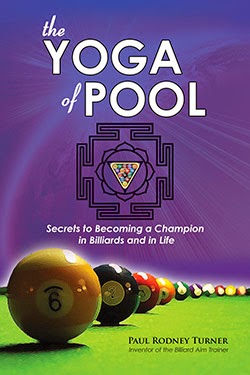
Excerpt from The YOGA of POOL – Secrets to Becoming a Champion in Billiards and in Life
(by Paul Turner)
ORDER NOW

- World’s Best Aiming System (eBook)
- The YOGA of POOL (eBook)
- BONUS: 20 Inspiration Cards (print or carry on your phone)
FAQ: Achieving Mind-Body Harmony in Billiards
Q: What is mind-body oneness?
A: Mind-body oneness refers to the harmonious integration of mental and physical states, where both aspects work together seamlessly. This unity enhances overall well-being and performance in activities like billiards.
Q: How can mind management affect physical reality?
A: Mind management influences physical reality by aligning thoughts and actions, allowing individuals to achieve desired outcomes. Through focused mental practices, one can enhance physical performance and life experiences.
Q: What role does positive self-talk play in mind-body oneness?
A: Positive self-talk strengthens the mind, promoting resilience and confidence. This mental conditioning supports the harmonious integration of mind and body, leading to improved performance in activities like billiards.
Q: How does the Bhagavad Gita relate to mind-body oneness?
A: The Bhagavad Gita emphasizes a steady mind, free from attachment, fear, and anger. This mental state is essential for achieving mind-body oneness, fostering inner peace and enhanced performance in life and sports.
Q: What does achieving mind-body harmony in billiards actually mean?
A: Achieving mind-body harmony in billiards means your mental state and physical execution support each other: calm attention, steady emotions, and clear decisions are reflected in relaxed posture, smooth cue delivery, and consistent routines. Instead of fighting nerves or frustration, you notice body cues early and guide them so focus and mechanics stay aligned through the whole match.
Q: How does mind management influence physical performance in pool?
A: Mind management influences physical performance because thoughts and emotions affect tension, breathing, tempo, and commitment to a shot. When the mind is scattered or self-critical, the body often tightens and the stroke changes. When the mind is steady and supportive, the body tends to soften, making it easier to aim, stay down, and deliver the cue smoothly.
Q: Why does the post say the mind follows what the body tells it?
A: The idea is that physical cues—like posture, muscle tension, and breathing—send signals that shape your mental state. If your shoulders are tight and breathing is shallow, the mind often interprets that as stress. When you calm the body, the mind frequently settles too, supporting better focus and decision-making at the table.
Q: How can Thich Nhat Hanh’s body-mind unity help a pool player?
A: The teaching supports the habit of “listening” to your body during practice and competition. In pool, that can mean noticing a tight grip, a rushed pre-shot routine, or a jittery stance. By calming and adjusting the body first, you often calm the mind, making it easier to choose correctly, commit to the shot, and stay present.
Q: What is positive self-talk in billiards, and why does it work?
A: Positive self-talk is intentional inner language that supports focus and resilience, such as reminding yourself to stay down, breathe, or trust your routine. It works because repeated self-messages condition confidence and reduce emotional spirals after misses. Over time, supportive self-talk helps the mind become an ally rather than an obstacle.
Q: What does it mean that “the mind is not you” in performance terms?
A: In performance terms, it means you can observe thoughts rather than automatically obey them. A negative thought like “don’t miss” can be treated as mental noise, then replaced with a useful cue. This creates space to choose responses—breathing, resetting, recommitting—so your body executes the shot with less interference.
Q: How does the Bhagavad Gita’s “steady mind” relate to pressure in pool?
A: The “steady mind” idea maps well to competition: don’t collapse when things go wrong, and don’t get reckless when things go right. Being free from attachment to outcomes, fear of missing, and anger after errors helps you keep a consistent pace and approach. That steadiness supports pattern play, shot selection, and repeatable mechanics.
Q: What are the “threefold miseries,” and how do they show up in matches?
A: The post defines threefold miseries as those of body and mind, those caused by other living entities, and those from natural disaster. In matches, these can look like fatigue or nerves (body/mind), opponents or spectators disrupting you (others), or environmental issues like noise or unexpected interruptions (external events). A steady mind aims to stay balanced despite them.
Q: How can mind-body disciplines improve consistency over an entire set?
A: Mind-body disciplines emphasize calm awareness, emotional regulation, and repeatable routines. In pool, that consistency matters because performance can swing after a single miss, bad roll, or big runout. Training the mind to reset and the body to relax helps you return to your baseline process—aim, commit, execute—shot after shot.
Q: What role does NLP play in confidence building for billiards (as mentioned in the post)?
A: The post notes that the book uses Neuro-Linguistic Programming (NLP) and other disciplines for confidence-building exercises. In practical terms, these approaches are often used to reshape internal language, strengthen mental cues, and reinforce helpful states like calm focus. The aim is to enhance the mental game so execution holds up under pressure.
Q: How does achieving mind harmony connect to learning an aiming system?
A: The post frames mental training as a foundation that supports technical improvement. Aiming systems can give structure and clarity, but they’re applied best when attention is steady and the body is calm. When mind and body are aligned, you’re more likely to commit to the aiming method, avoid rushed adjustments, and execute the shot cleanly.
Q: Can achieving mind-body harmony help after a mistake or loss?
A: Yes. The “steady mind” approach emphasizes staying free from fear, anger, and attachment to outcomes. After a mistake, mind-body harmony encourages noticing tension or agitation, calming the body, and using supportive self-talk to reset. That response improves your chance of making the next correct decision rather than compounding the error.
Leave a Reply
You must be logged in to post a comment.