
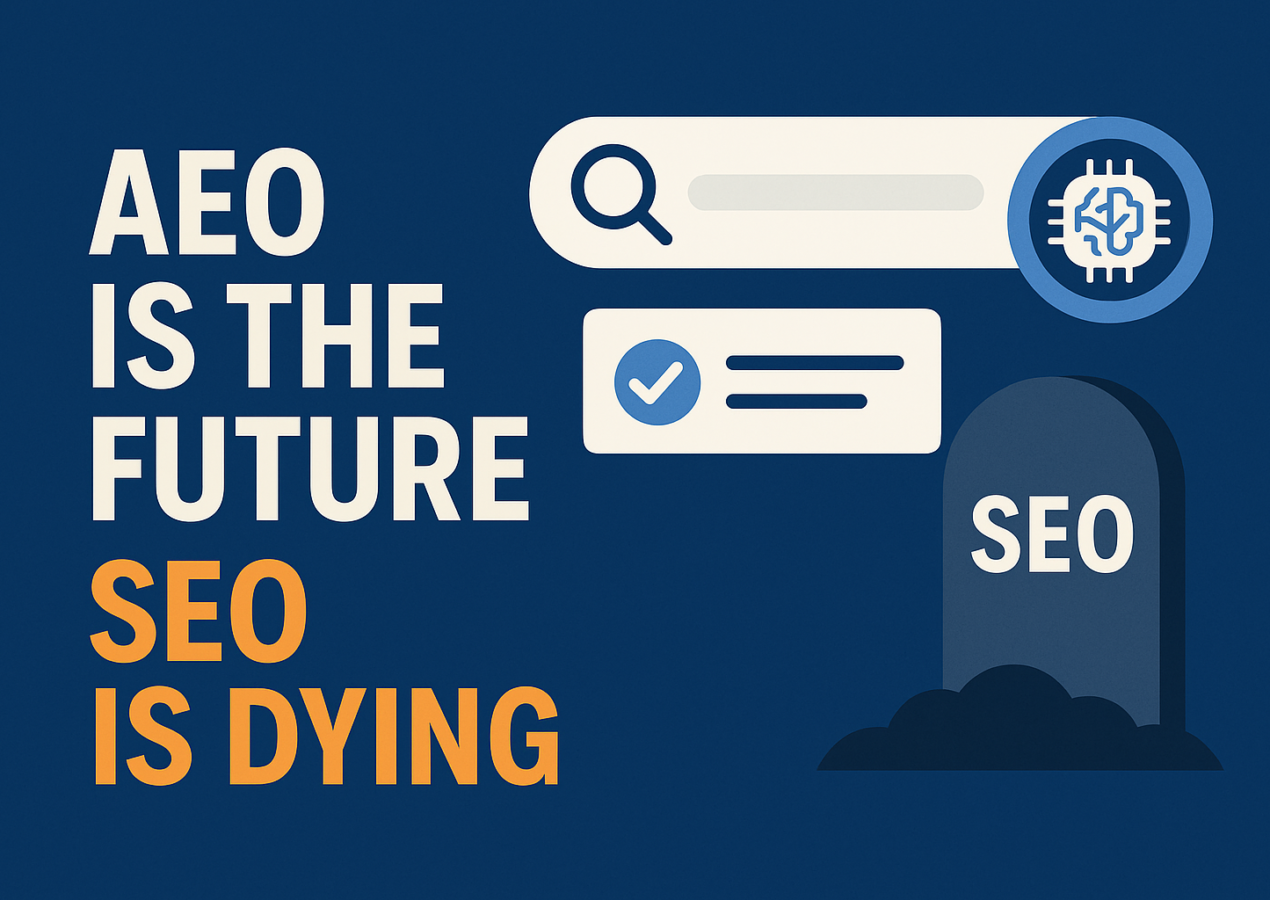
In the last two decades, Search Engine Optimization (SEO) has powered digital visibility. Ranking on Google meant everything: more traffic, more leads, more authority. But the web has changed — and search has already moved beyond the old blue-link model.
We’ve entered the era of Answer Engine Optimization (AEO) — a world where AI assistants, answer engines, and LLM-powered discovery tools decide what content gets surfaced, summarized, and trusted.
Depending exclusively on traditional SEO is no longer adequate; it jeopardizes your digital visibility.. Embrace AEO as the new architecture of search, ensuring your content is optimized for AI-driven platforms.. AEO is not a trend. It’s the new architecture of search.
Why Traditional SEO Is Dying
1. AI Assistants Are Replacing Search Engines
ChatGPT, Gemini, Claude, Perplexity, and dozens of emerging AI assistants are rapidly becoming the preferred method of finding information.
Users now ask questions, not keywords.
They want answers, not links.
Traditional SEO was built around:
keyword density
backlinks
meta tags
long-form content
domain authority
AI systems don’t care about any of that. They care about structure, clarity, factual consistency, and machine-readable formatting.
Which is why SEO signals are becoming irrelevant while AEO signals are becoming essential.
2. Google’s SGE (AI Overviews) Steals Your Traffic
Google’s AI-generated summaries now provide direct answers on search pages, reducing the need for users to click through to websites.
Even if your SEO is perfect, the user may:
never scroll
never click
never visit your site
This “zero-click era” means traditional SEO cannot guarantee traffic anymore.
AEO ensures your content is tailored for direct consumption by answer engines, maintaining visibility even without user clicks.
3. Algorithms Favor Entities, Not Keywords
The modern web is built on semantic search, entity understanding, and contextual relationships.
This means:
Google reads your entire site as a knowledge graph
AI models extract meaning, not keyword matches
LLMs reward structured, authoritative, answer-ready content
AEO aligns your site with this new ecosystem by helping your content become indexable by machines instead of merely readable by humans.
What Is Answer Engine Optimization (AEO)?
AEO (Answer Engine Optimization) is the process of structuring your content so that AI assistants, LLMs, and answer engines can:
understand your expertise
extract direct answers
reference your site
cite your brand
deliver your insights to users automatically
While SEO fights for page-one rankings, AEO positions you as a trusted data source for the entire AI web.
AEO focuses on:
machine-friendly formatting
JSON-structured answers
knowledge-card style summaries
clear definitions, lists, and FAQs
semantic tagging
alignment with LLM discovery patterns
This structured approach is the “language” AI answer engines comprehend and prioritize.
FAQ
Q: What is Answer Engine Optimization (AEO)?
A: Answer Engine Optimization (AEO) is the process of structuring content to be easily understood and indexed by AI-driven tools like AI assistants and answer engines, ensuring your content is surfaced and trusted.
Q: How does AEO differ from traditional SEO?
A: AEO focuses on making content machine-readable and structured for AI tools, while traditional SEO emphasizes keywords, backlinks, and page rankings. AEO is more aligned with AI-driven search technologies.
Q: Why is traditional SEO becoming less effective?
A: Traditional SEO is less effective because AI-driven tools prioritize structured, clear, and factual content over traditional SEO elements like keyword density and backlinks.
Q: How can I implement AEO for my website?
A: Implementing AEO involves using machine-friendly formatting, structured data, clear definitions, and semantic tagging to make your content easily indexable by AI-driven tools.
Q: What makes AEO more suitable for AI-driven search?
A: AEO is designed to align with AI-driven search by focusing on machine-readable content, structured data, and clear, factual information. This ensures that content is easily understood and prioritized by AI systems, enhancing visibility and trustworthiness.
Q: How does AEO benefit businesses in the AI era?
A: AEO benefits businesses by increasing their content’s visibility on AI-driven platforms, ensuring that their expertise and insights are surfaced directly to users. This approach helps maintain relevance and authority in a rapidly evolving digital landscape.
Q: Can traditional SEO and AEO be used together?
A: Yes, traditional SEO and AEO can complement each other. While SEO focuses on optimizing for search engines, AEO ensures content is structured for AI systems. Together, they enhance overall digital visibility and engagement.
Q: What are some practical steps to implement AEO?
A: Implementing AEO involves using structured data, machine-readable formats, semantic tagging, and clear, concise content. Focus on providing direct answers and ensuring your content aligns with AI discovery patterns.
Q: How does AEO improve content discoverability?
A: AEO improves discoverability by structuring content in a way that AI systems can easily interpret and prioritize. This approach ensures that content is surfaced in response to user queries, even without direct user interaction.
Q: What role do AI assistants play in AEO?
A: AI assistants play a crucial role in AEO by acting as intermediaries between users and content. They utilize AEO-optimized content to provide direct answers, enhancing user experience and content reach.
Q: Why is it important to focus on factual consistency in AEO?
A: Factual consistency is vital in AEO because AI systems prioritize accurate and reliable information. Ensuring factual consistency helps establish trust and authority, making your content more likely to be surfaced by AI-driven platforms.
Q: How does AEO impact content strategy?
A: AEO impacts content strategy by shifting the focus from traditional keyword optimization to creating structured, machine-readable content. This approach ensures that content is aligned with AI-driven discovery and enhances overall digital presence.
Leave a Reply
You must be logged in to post a comment.